Getting past a wrong stamp
Press FALSE ALARM on the red bar (or the "false alarm" link at the bottom of a comment or ad's details). A small dialog asks what you want:
- Keep me safe leaves the stamp where it is. This is the default, because most people who press FALSE ALARM on a real scam were about to be talked into it.
- Ask someone you trust writes a short message you can send before deciding.
- Unlock just this once takes the stamp and the lock off this page or conversation, for now. Next time, it's checked again.
- Always trust this site for this stops this kind of warning on this website from now on. It's offered for websites only, never for an email, a chat or a single comment.
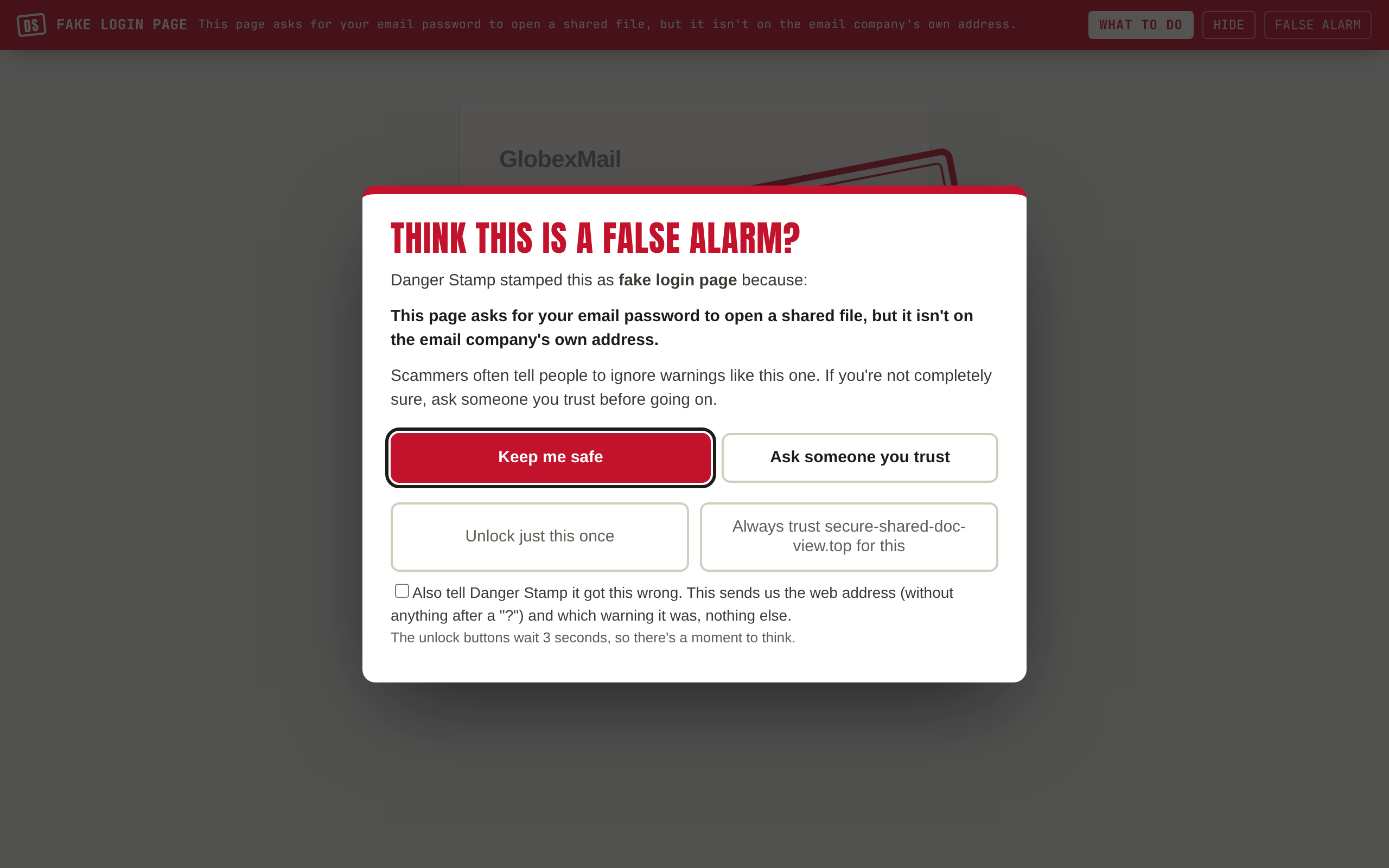
The unlock choices appear after a short pause, so a scam page can't rush you into pressing them.
A Danger warning (the softer notice Free shows) has its own small link: Stop warning me on this site, or about this sender or this chat.
Undoing it
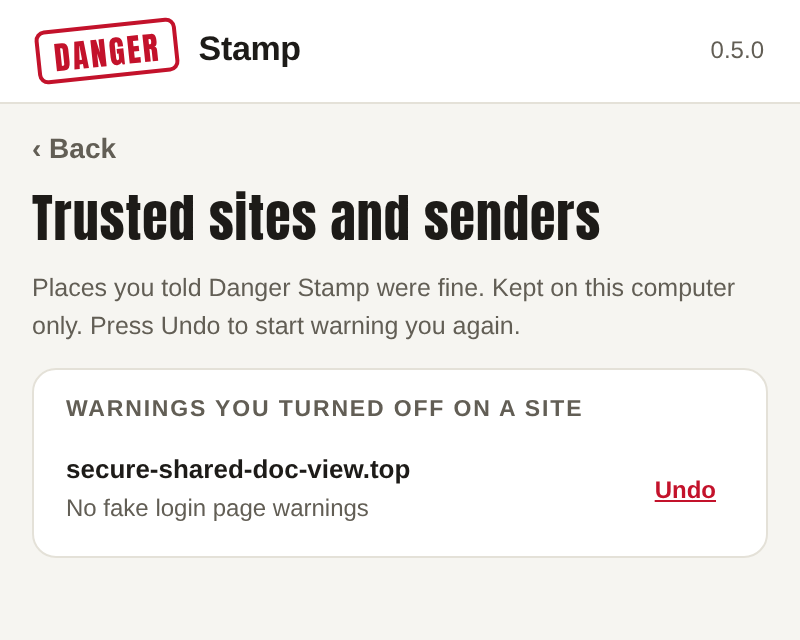
Press the Danger Stamp button in the toolbar, then Trusted sites and senders. Everything you have trusted is listed there, kept on this computer only. Press Undo next to one and Danger Stamp starts warning you about it again.
Telling us it got it wrong
In the FALSE ALARM dialog there is an unticked box: Also tell Danger Stamp it got this wrong. Tick it and we receive the web address (without anything after a "?") and which warning it was. Nothing else: not the page, not who you are. It's off unless you tick it, every time.
Every false alarm we hear about becomes a test case, so the same real page is never stamped again for anyone. Got more to say about it, or a screenshot? Use the report page instead and say in the message box that it was a false alarm.
Why it happens
Danger Stamp reads the page in front of it, not a list of known scam sites. That is how it catches a fake page that went up an hour ago, and it's also why a real page can occasionally trip it: a small business's sign-in page on a free host, a brand-new shop, a bank's own page on an address it doesn't usually use. It knows the real addresses of thousands of brands and every US bank and credit union, and that list grows with every report.